
It all started when I decided to quit cold turkey. Then I realized….
Many individuals over or misuse of substances starts out as just as ‘just occasional or social use’. Unfortunately, for some this can spiral into a daily habit that no longer allows the body to feel “normal” unless it has that chemical in the system. This is what clinicians define as “dependence”.
If you try to abruptly stop using… there’s a pretty good chance that you will experience withdrawal. You can weather this storm, but it starts with knowing what to expect and when the symptoms of withdrawal will end. Most importantly - it is important that you understand that withdrawal from some substances is a dangerous time. In most cases, withdrawal symptoms are not life-threatening (EXCEPT for benzodiazepines, alcohol, SSRI/SNRI and Soma), but often thoughts of self-harm do occur, and immediate mental health support is recommended.
Anxiety, gastric symptoms, insomia and night sweats may last as long as it takes for your body to reach a state of balance - which may be weeks for some people, and months for others - depending on their metabolism, how frequently a substance is used , and one’s overall health.
Night sweats can also happen when the body breaks down and eliminates the chemical. For example, the THC within marijuana is stored in fat cells - but as it gets released with exercise or stress, the THC interacts with the endocannibinoid system and raises the body’s temperature at night (when the body goes through it normal restoration phase).
Wondering whether you are already having some symptoms of withdrawal? Here are the typical symptoms you should watch out for:
Digestive upset including nausea, stomach pains, diarrhea, and vomiting - versus diarrhea, stomach pains, nausea from Cannabinnoid Hyperemesis Syndrome
Reduced appetite
Headaches
Sore, achy muscles
Increased heart rate
Tremors
Intense cravings for marijuana or other drugs
Difficulty concentrating
Troubles falling asleep and other sleep problems
Vivid and disturbing dreams
Irritability
Depression
Anxiety
Mood swings
High blood pressure
Dehydration
Delusions
Psychosis
NORTH SHORE OSTEOPATHIC is here to provide you symtom management, encouragement, and a soft place to land when you are ready to make that leap of faith that you may be better off without less-than-optimal self-management options (i.e., destructive behaviours, inconsistently bioactive supplements, incorrectly prescribed medications, or just occasional overuse).
Now perhaps what you are using does have some positive effects? We get it….BUT Let’s talk about what symptoms you are trying to control. Let us evaluate you to ensure that those symptoms are not indicative of something more concerning. Then let us work together with you so as to find some other options that may be more appropriate and effective to treat what ails you.
Our Team will strive to meet you where you are, target the issues at hand, and be a steadfast lighthouse to guide you back to a safe harbour. We will continue to be a dynamic resource as well as a trustworthy safe haven for as long as you need us.
Dependence versus Addiction
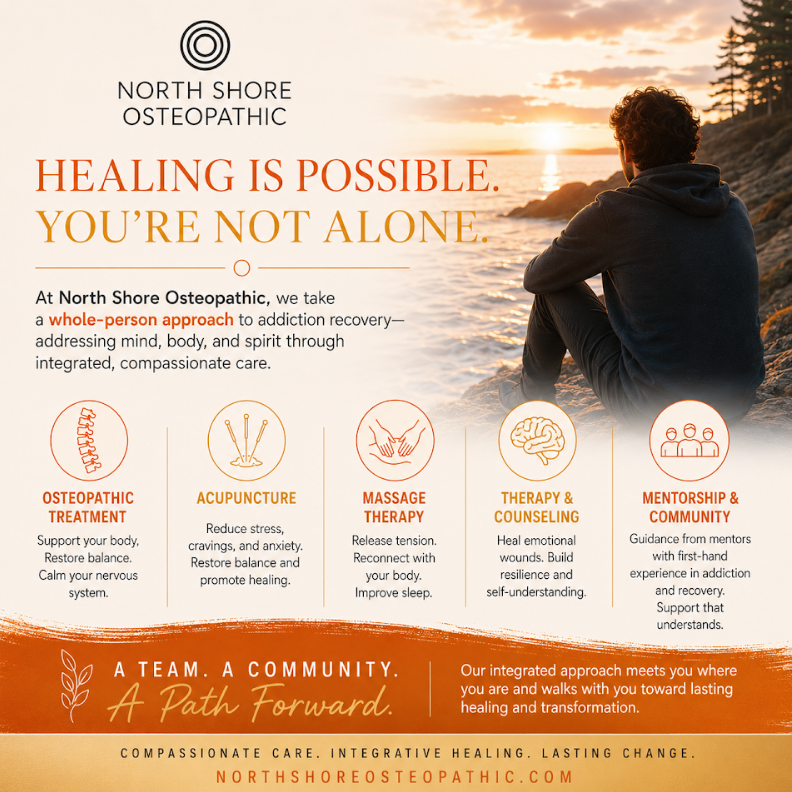
Dependence is often misunderstood as a lack of willpower or discipline. In reality, it is a complex condition that impacts the nervous system, emotional health, relationships, physical body, and sense of identity. One can be dependent on almost anything: another person, controlled substances, cigarrettes, sex, gambling, etc. as the benefits of the relationship with the overused/misused option outweight any risks or setbacks. HOWEVER, when an individual starts to substitute good judgement or make their dependence a priority over other relationships or obligations - or worse yet - become injurious or disrespectful to those around them - this DEPENDENCE IS REDEFINED AS ADDICTION. At NORTH SHORE OSTEOPATHIC, we approach addiction recovery through a whole-person lens — recognizing that avoidance and healing requires more than managing symptoms and fallout from addiction alone.
Our philosophy is rooted in integration. Recovery is not simply about stopping a behavior or substance. It is about REBUILDING CONNECTION: connection to the body, to emotional regulation, to community, and to purpose.
A Whole-Person Approach to Recovery
Many individuals struggling with addiction were already experiencing chronic stress, trauma, anxiety, depression, nervous system dysregulation, chronic pain, or emotional isolation - EVEN BEFORE THE FIRST EXPERIENCE. These challenges often feed into one another. That is why our care model brings together multiple healing disciplines to support recovery from every angle.
Rather than asking, “What is wrong with you?” we ask, “What has your system been carrying?”
Osteopathic Treatment: Supporting the Nervous System
Osteopathic care focuses on the relationship between structure and function within the body. Through gentle hands-on treatment, osteopathic physicians can help regulate the nervous system, improve circulation, reduce physical tension, and support the body’s natural healing processes.
For individuals recovering from addiction, this can be especially valuable. Many people live in prolonged states of fight-or-flight activation, emotional shutdown, or chronic physical discomfort. Osteopathic treatment helps restore balance and create safety within the body — an important foundation for sustainable recovery.
Acupuncture: Restoring Balance and Regulation
Acupuncture has long been used to support emotional regulation, stress reduction, sleep, cravings, and overall nervous system health.
Many individuals in recovery struggle with anxiety, restlessness, irritability, and physical tension during the healing process. Acupuncture can help calm the system, promote grounding, and support the body’s ability to recover naturally.
Patients often describe treatments as helping them feel more centered, present, and emotionally stable.
Massage Therapy: Reconnecting With the Body
Addiction frequently disconnects individuals from their physical selves. Tension, trauma, stress, and emotional pain can become stored in the body over time.
Massage therapy provides a safe and therapeutic way to reconnect. Beyond relaxation, massage can help reduce stress hormones, improve sleep, decrease pain, and increase body awareness.
For many people in recovery, learning to feel safe in their own body again is a major step forward.
Therapy and Emotional Healing
Psychotherapy plays a critical role in addressing the emotional and psychological roots of addiction. Recovery often involves processing unresolved trauma, understanding behavioral patterns, improving coping strategies, and rebuilding self-worth.
Our collaborative model recognizes that emotional healing and physical healing are deeply connected. Therapy provides the space for insight, accountability, and growth while supporting long-term resilience.
Mentorship and Human Connection
One of the most overlooked components of recovery is connection. Isolation fuels addiction. Healthy relationships support healing.
Our mentorship approach includes individuals with lived experience in addiction and recovery who understand the journey firsthand. Their ability to relate authentically, provide guidance, and model long-term healing can create a level of trust and understanding that is difficult to replicate otherwise.
Having support, accountability, and community can help individuals navigate difficult transitions while building confidence and hope.
Healing happens most effectively when people feel seen, understood, and supported.
Treating the Person, Not Just the Addiction
At NORTH SHORE OSTEOPATHIC, we believe addiction care should be compassionate, individualized, and integrative. Every person’s story is different, which means every healing journey is different as well.
By combining osteopathic medicine, acupuncture, massage therapy, counseling, mentorship, and nervous system-focused care, we aim to support recovery in a way that honors the full human experience — mind, body, and spirit.
Recovery is not about perfection. It is about rebuilding health, connection, and capacity one step at a time.
If you or someone you love is struggling with addiction, know that healing is possible, and you do not have to navigate it alone.